About
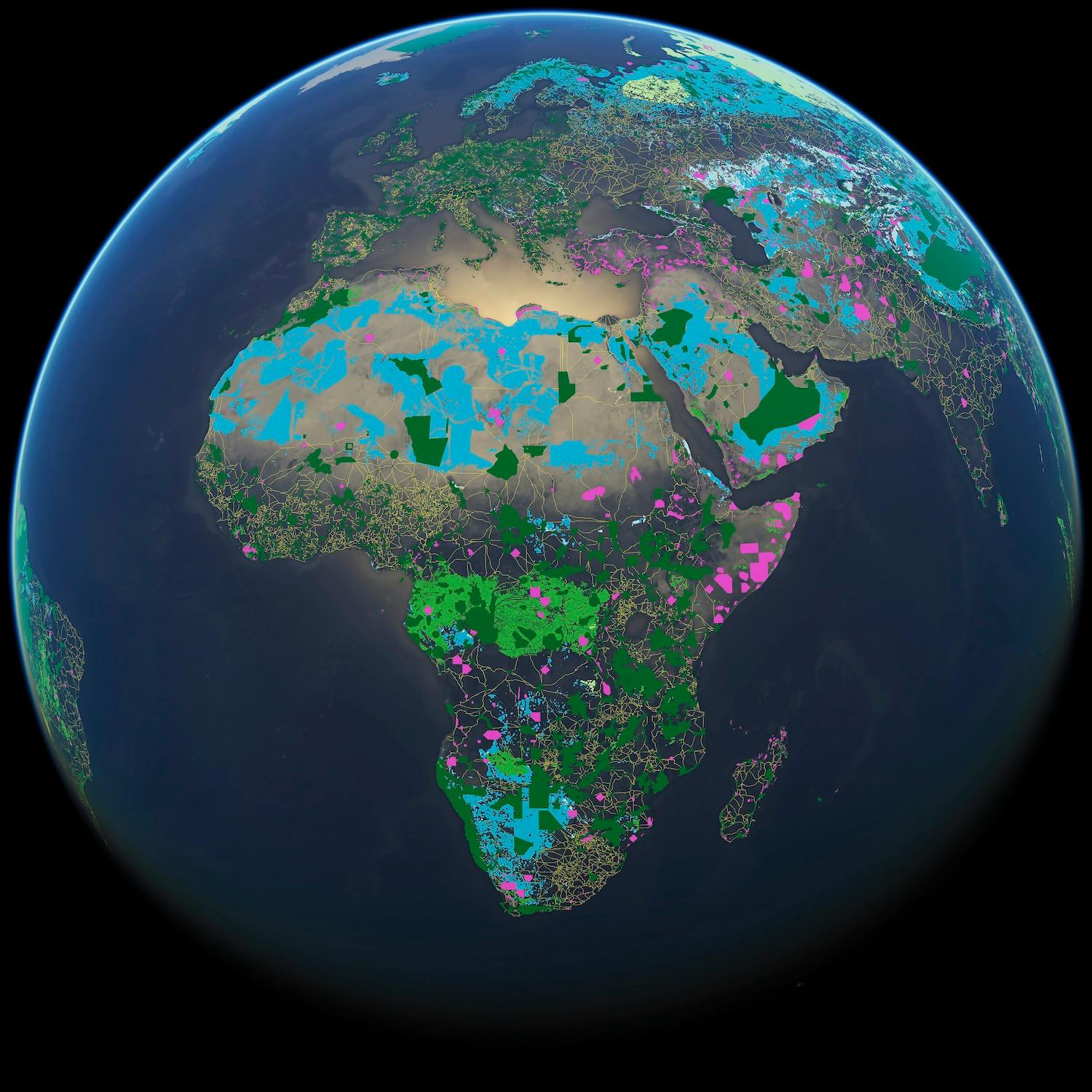
More than two years in development, the Global Safety Net is the first comprehensive global-scale analysis of terrestrial areas essential for biodiversity and climate resilience, totaling 50.4% of the Earth’s land. The report was published in Science Advances and highlights the importance of protecting and restoring the natural world to address three converging crises — climate change, the loss of biodiversity, and the emergence of novel viruses such as COVID-19.
The research team was led by the research organization RESOLVE in collaboration with the University of Minnesota, Arizona State University, and Globaïa, with funding provided by One Earth. The data compiled for the Global Safety Net (GSN) is available through an interactive web application developed by One Earth and Octophin Digital. Users can click on a country, state, or ecoregion to see configurations of biologically important land for each region.

The research effort builds upon an array of global-scale data sets to identify areas that require conservation beyond the 15.1% of land area currently protected. These are compiled into five main layers at a 1 km resolution: Species Rarity Sites, High Biodiversity Areas, Large Mammal Landscapes, Intact Wilderness, and Climate Stabilization Areas.
This is the first digital map of its kind to create a ‘blueprint’ for saving life on Earth. It builds upon the current network of protected areas but weaves in currently unprotected parcels that conserve the biological wealth of Earth. By connecting these parcels with wildlife corridors, these vital strands create a true safety net, one that can inoculate us from further biodiversity loss and future pandemics by conserving habitats where zoonotic diseases are likely to cross over to human populations. – Eric Dinerstein, RESOLVE
The report concludes that an additional 35.3% of land is needed to conserve sites of particular importance for biodiversity and ecosystem services. Fifty ecoregions and twenty countries contribute disproportionately to the total. One immediate priority identified is the protection of 2.3% of land area, which provides critical habitat for the world’s most endangered species.

Each of the world’s 844 ecoregions has a unique combination of layers, offering recommended area-based conservation targets for each country. This effort is not intended to depict the exact spatial configuration of a global conservation plan, but rather to inform a “common but differentiated” approach to government commitments under the UN Convention on Biodiversity.
Each country is in the position to make a unique contribution towards the collective goal of safeguarding our biosphere and providing the essential ecosystem services upon which humanity relies for health and wellbeing.
If we surpass 1.5°C in global average temperature rise, it will be difficult if not impossible to achieve the goals of the UN Convention on Biodiversity. And if we fail to protect lands for ecosystem services and carbon sequestration, we will not be able to achieve the Paris Climate Agreement. The two conventions are intertwined. There is a very finite amount of natural land that could be converted to human uses before we lose the 1.5°C window. Therefore, we need to protect all remaining natural lands by 2030 – approximately 50% of the Earth – in order to save biodiversity and stabilize our global climate system. – Karl Burkart, One Earth
The analysis includes estimates of carbon storage by layer, making the same map relevant for government commitments under the Paris Climate Agreement (UNFCCC). It also highlights the vital role of Indigenous lands in protecting biodiversity and reversing climate change, which covers 35% of the Global Safety Net area. No human displacement should occur to protect the full 50% identified in the Global Safety Net.

Forest plays a major role in carbon sequestration, which is crucial for achieving the global warming targets set by the Paris Climate Agreement. The Global Safety Net finds that 1/4 of Earth’s land area is forested (32.8 M km2), only 28% of which is protected. Protecting the remainder of these forests, which contain more than 1.3 trillion tonnes of carbon, are vital to maintaining the balance of our global climate system. – Anup Joshi, UMN
A complementary global-scale connectivity analysis was performed by the research organization Globaïa, demonstrating that a relatively modest land area – approximately 350 million hectares – could connect isolated fragments of nature together, increasing the resilience of ecosystems and our biosphere as a whole.